A short campertrip that we made in the summer of 2026 in our home country
Period 7 july 2026 – 14 july 2026. Distance 1,065 km.
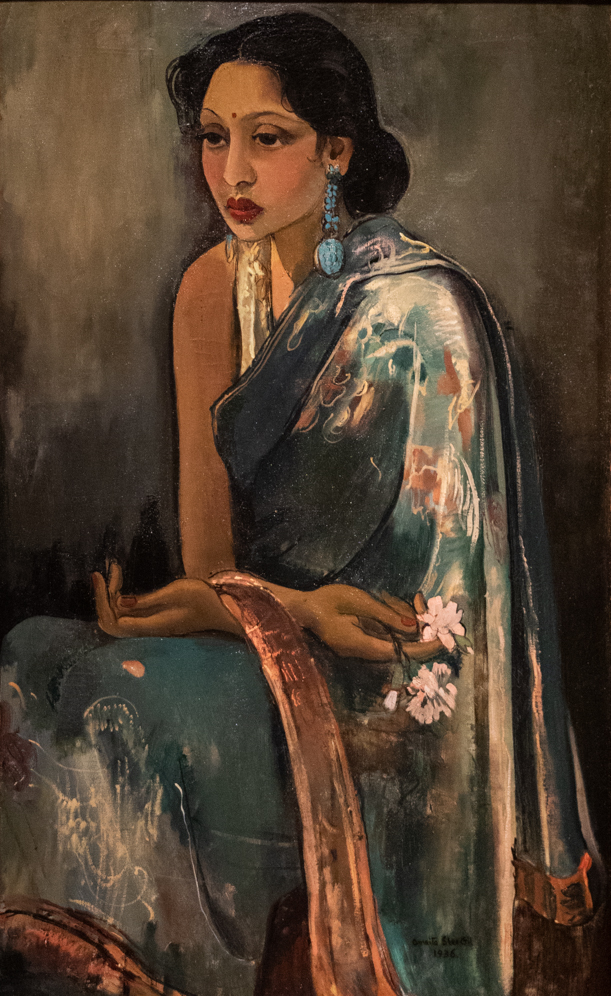
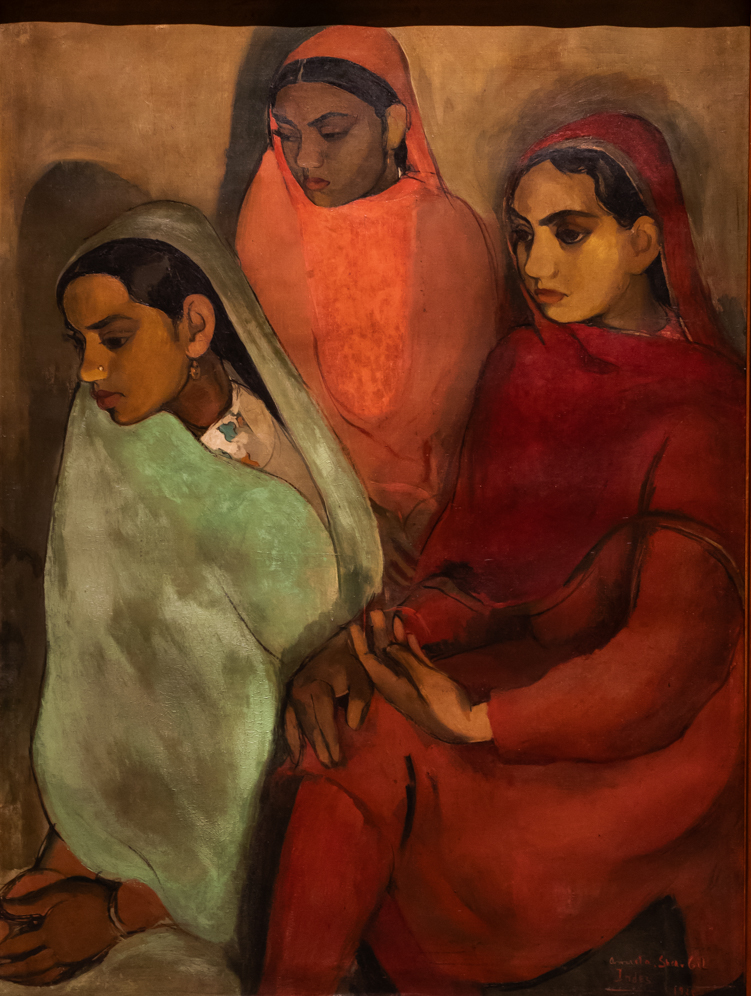
In the summer of 2026, we took a short camper trip through the Netherlands. We did not have a fixed itinerary, but there were two things we really wanted to do: visit Amersfoort and see the exhibition of Hungarian-Indian artist Amrita Sher-Gil at the Drents Museum in Assen.
Click the green place names under Highlights of our trip to open the corresponding photo series on SmugMug.
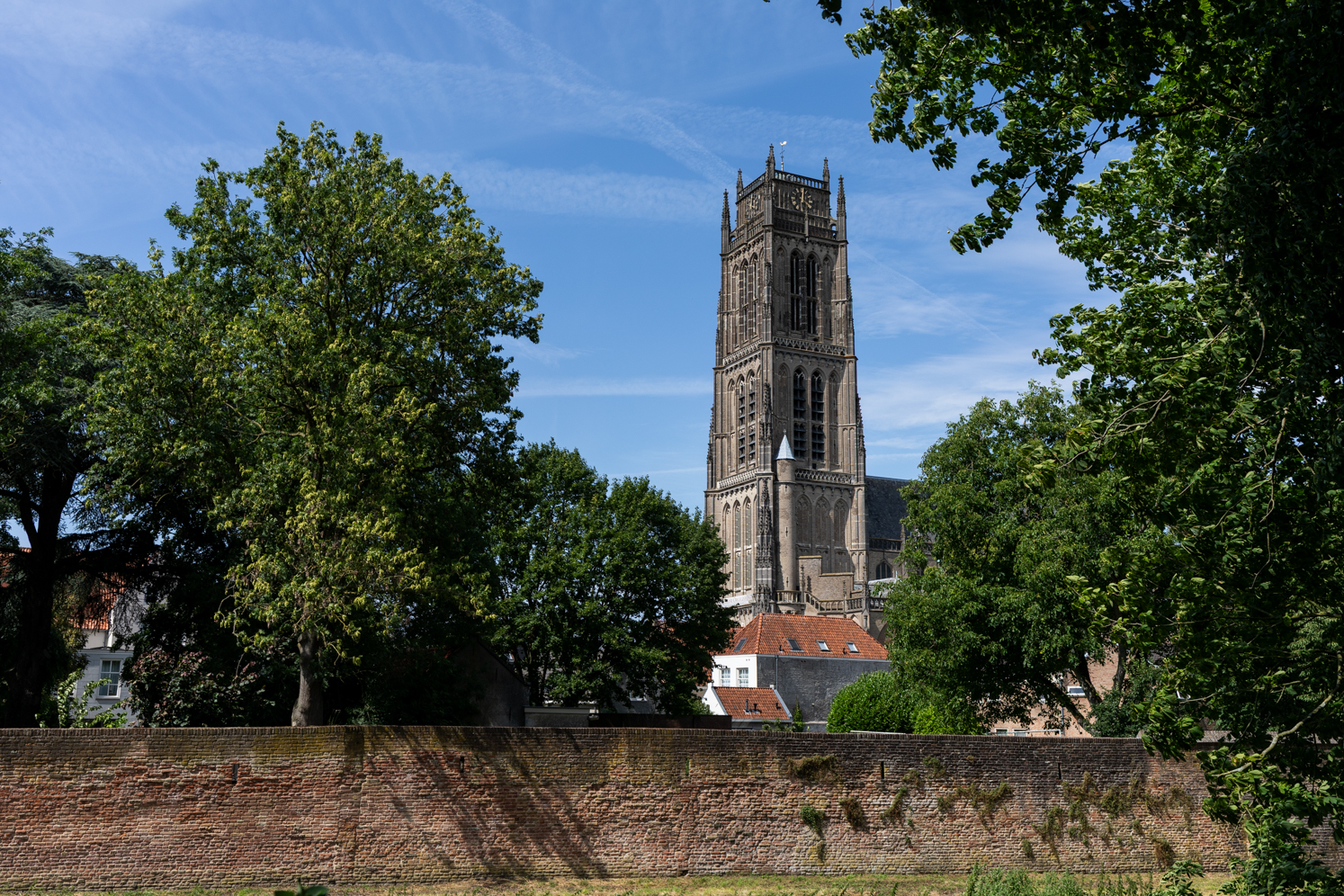
Zaltbommel is a fortified Hanseatic town in the Bommelerwaard and lies on the south bank of the River Waal.
We took a long walk along the city ramparts and fortifications. The old ramparts are almost completely intact and now form a city park with beautiful, mature trees. There is an old cemetery with a Jewish section, as well as a bandstand where events still take place. After walking along the ramparts, we wandered through the old town centre. Zaltbommel is a charming small town with plenty of sights worth taking time to enjoy:
The Grote or Sint-Maartenskerk is, apart from the bridge, the most distinctive building in Zaltbommel. With its blunt tower, the church gives the town its characteristic appearance.
The Jewish cemeteries
Zaltbommel Town Hall
The Gasthuis, with its chapel and Gasthuistoren, whose carillon was cast by the Hemony brothers in 1654
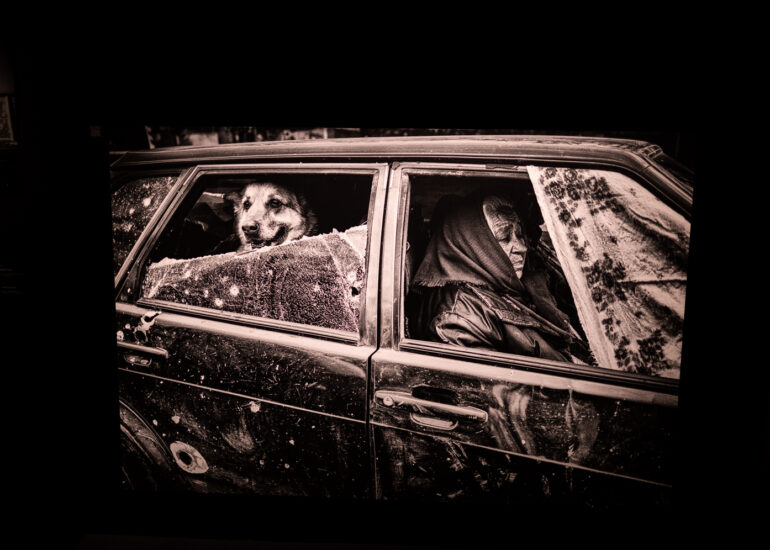
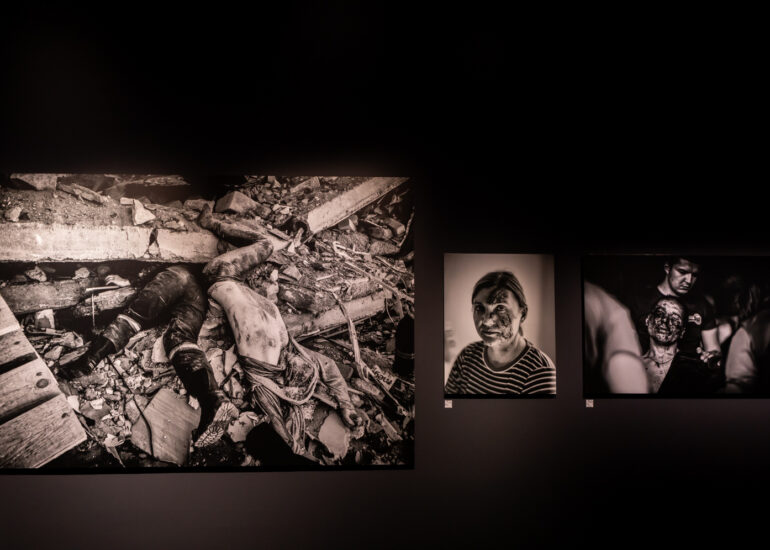
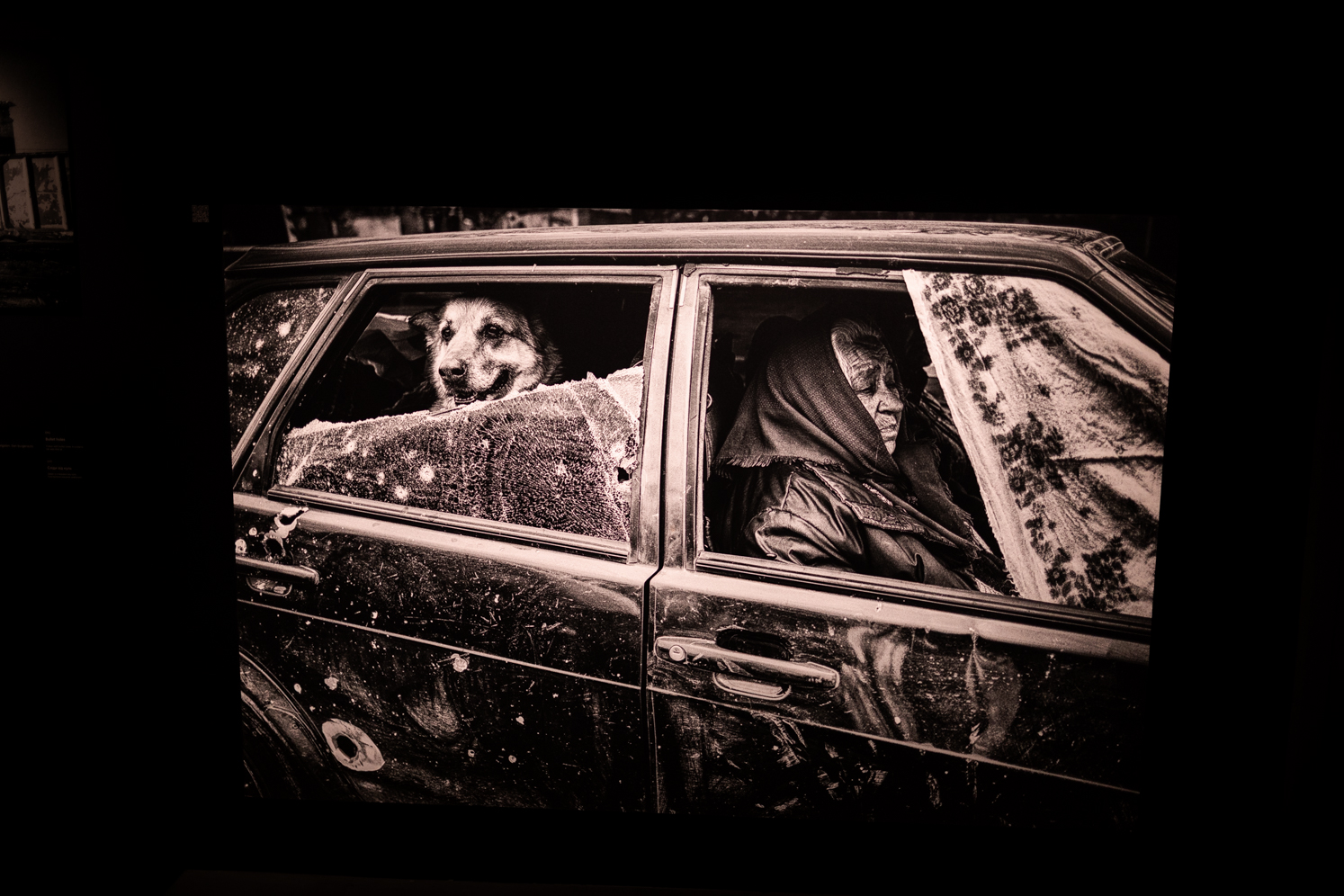
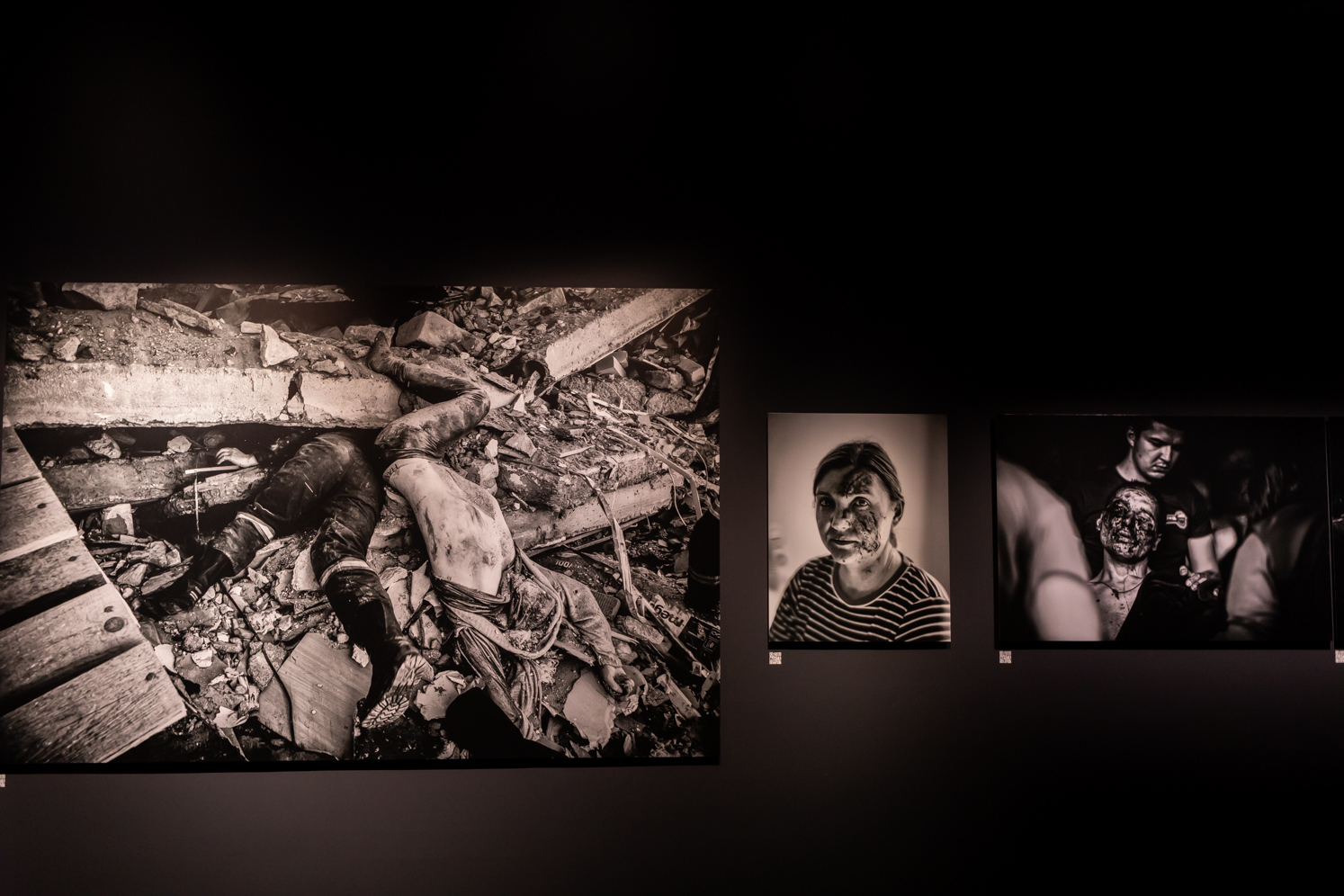
The museum was showing a photo exhibition by Dutch war photographer Eddy van Wessel: War Stories – Ukraine Up Close. The photographs of this terrible war were deeply impressive. Van Wessel works with analogue photography, which feels remarkable in our digital age. He clearly knows his craft. It must be incredibly difficult, and uncomfortable, to photograph people at some of the worst moments of their lives. And yet these photographs need to be made. For me, the image of a woman saying goodbye to her husband at Kharkiv station says everything about war.
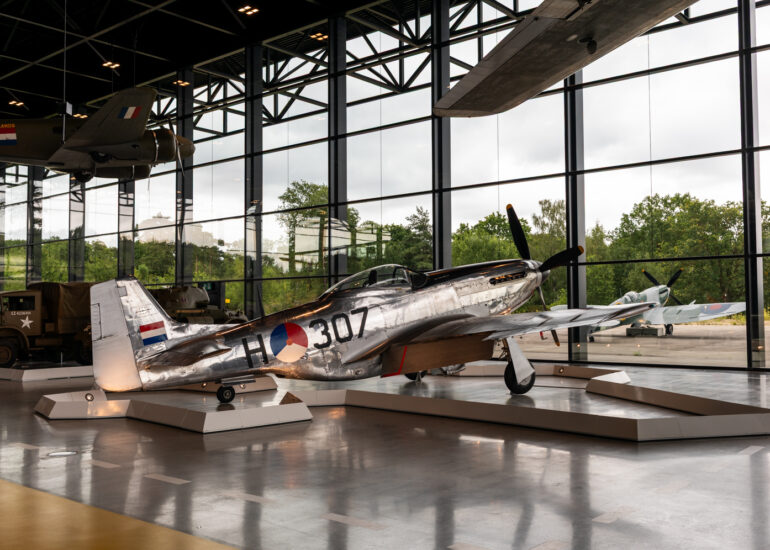
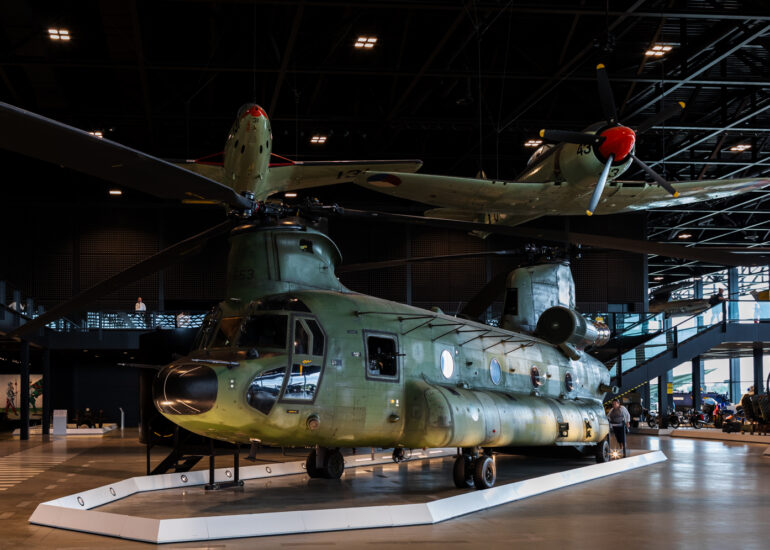
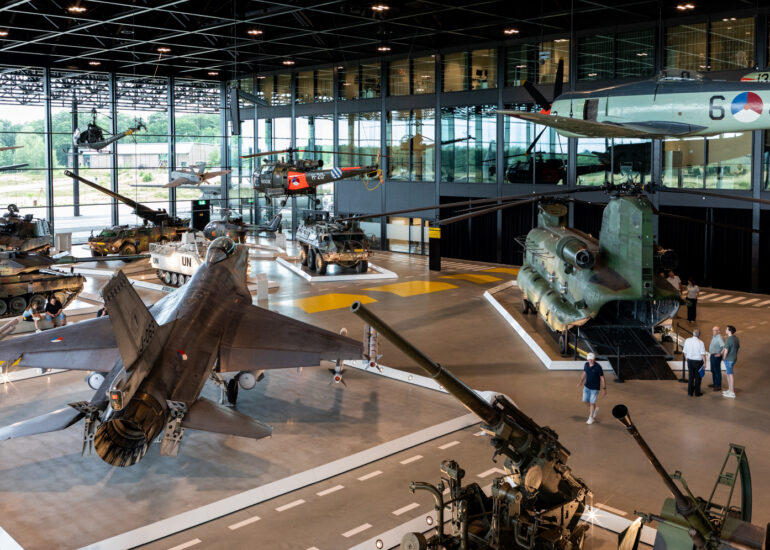
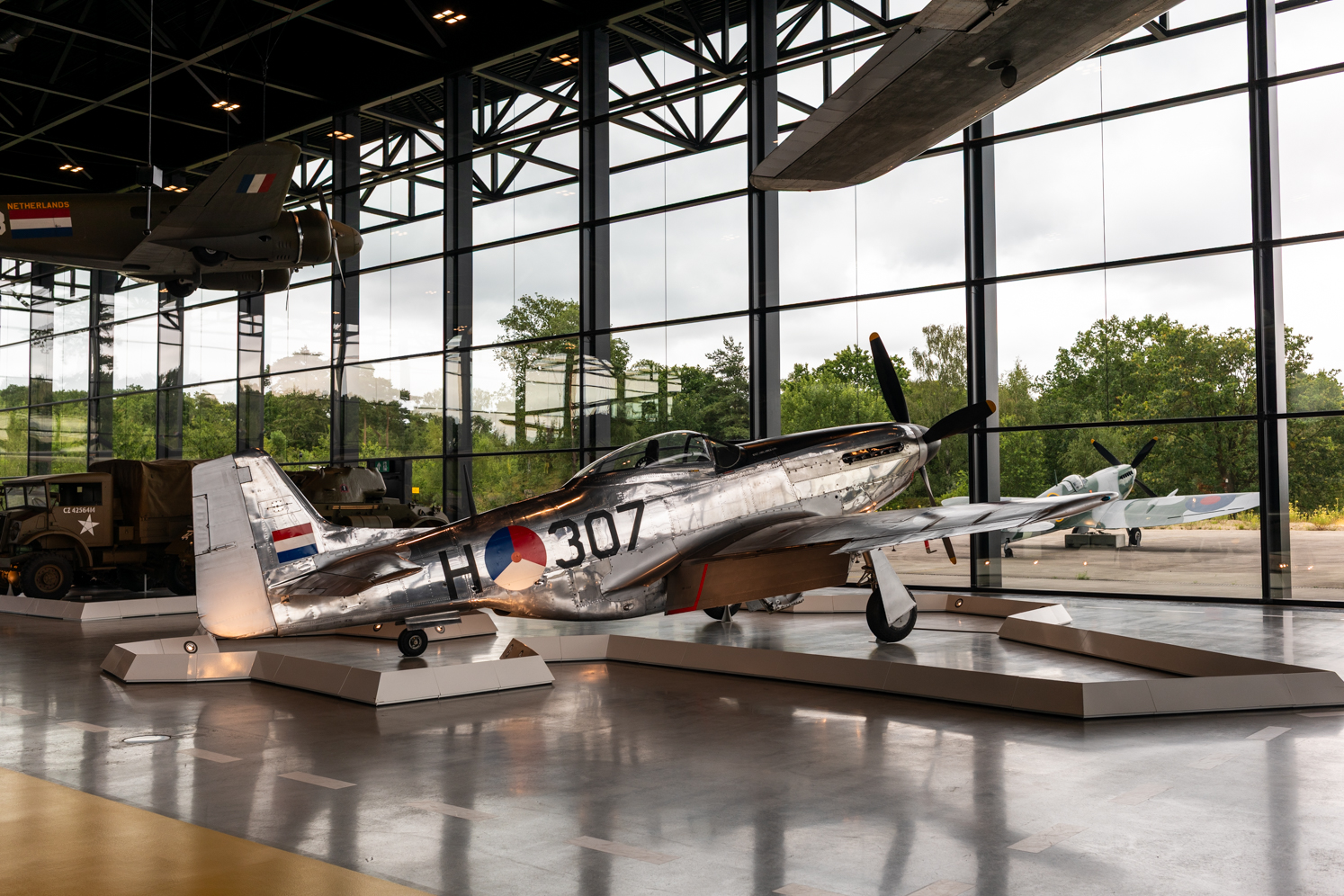
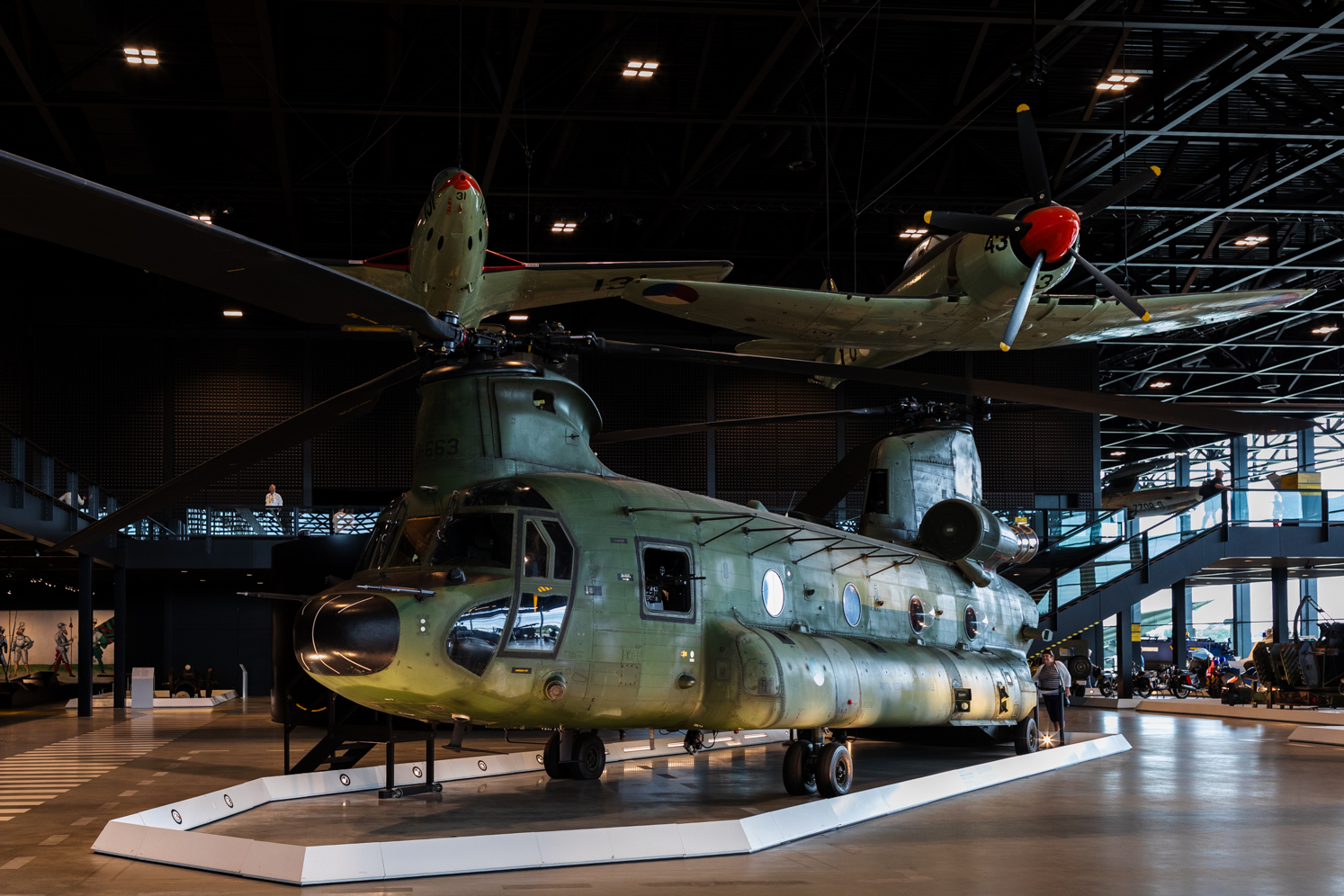
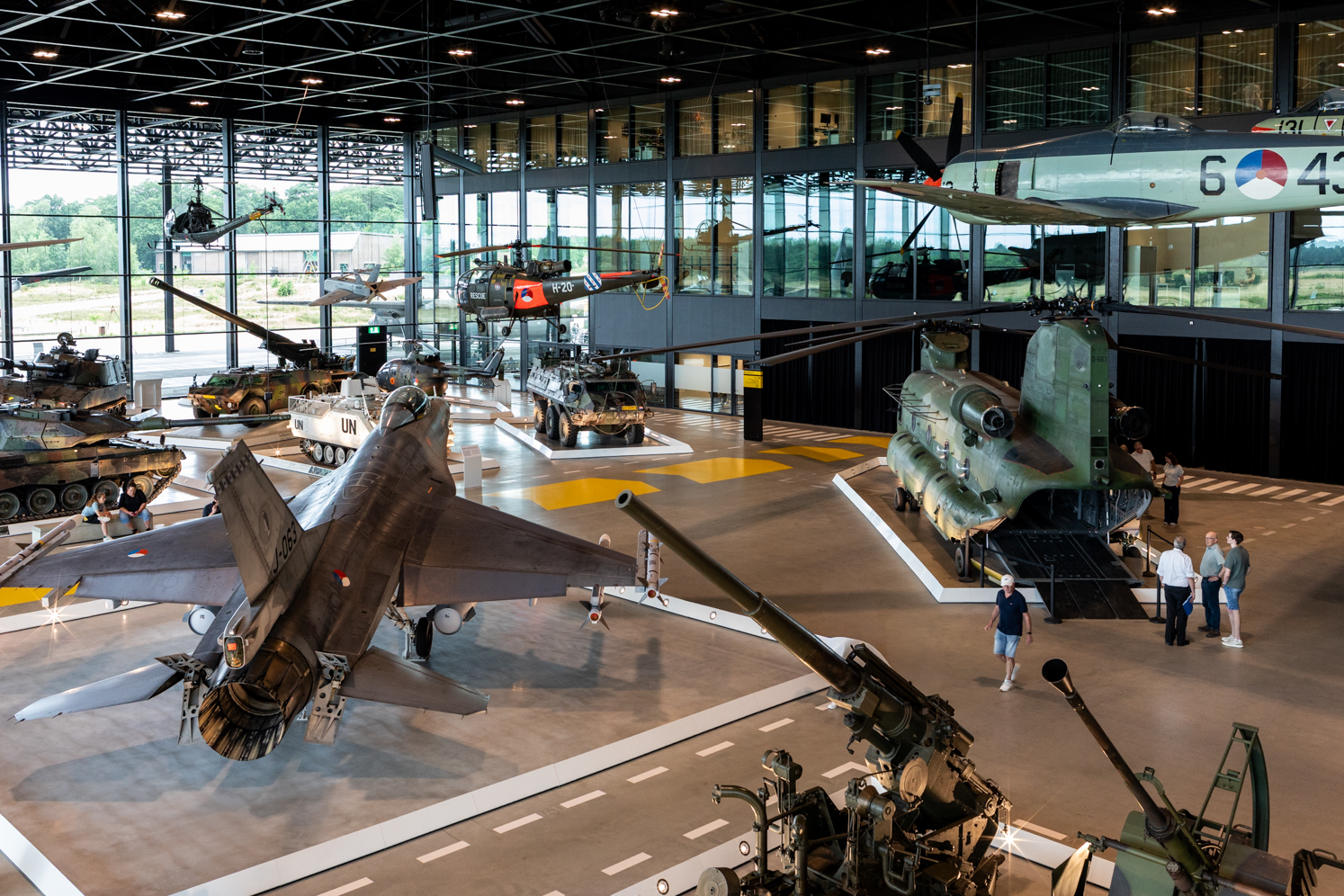
After visiting the photo exhibition, I wandered through the museum’s large hall, among all the war machines: aircraft, helicopters, tanks and more. It is impressive, but all of it is designed to kill. Link to the website of the museum (please click).
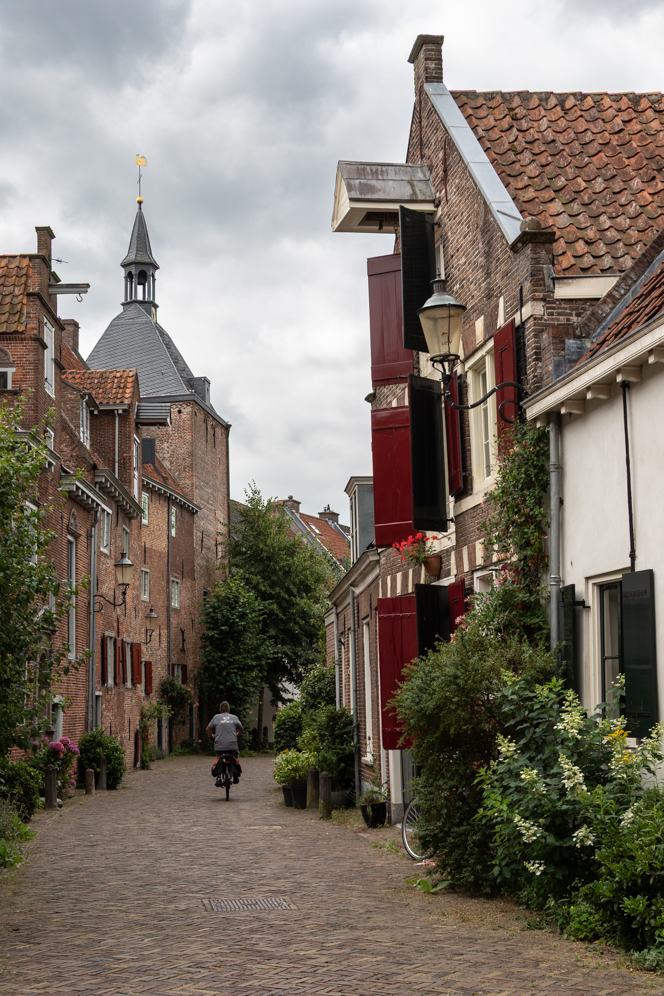
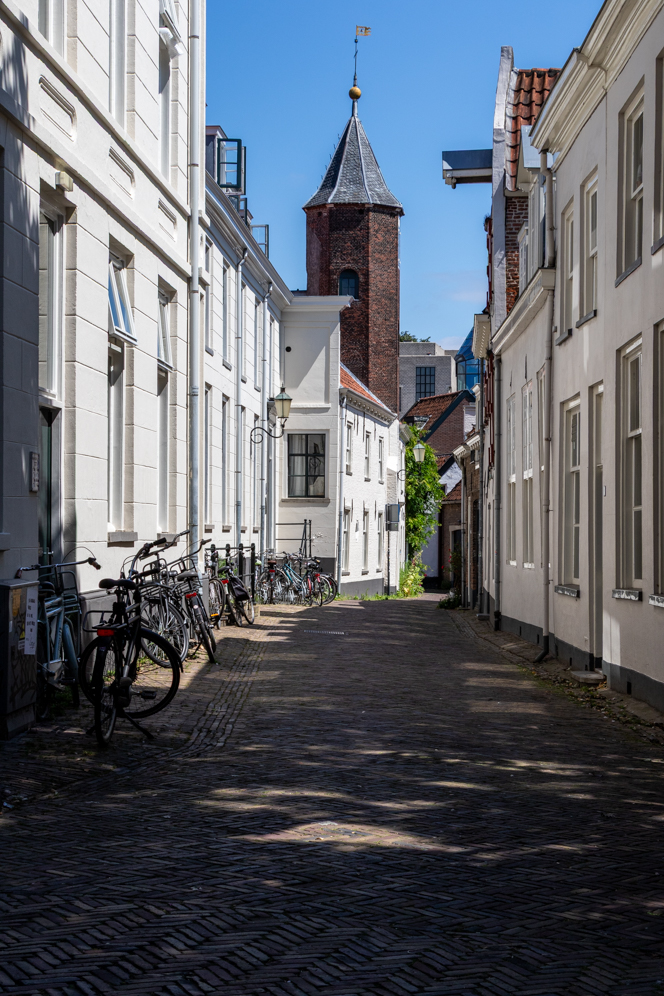
Amersfoort is a city and municipality in the province of Utrecht. It has a rich history and a medieval character, with many historic buildings and sights. Amersfoort has held city rights since 1259.
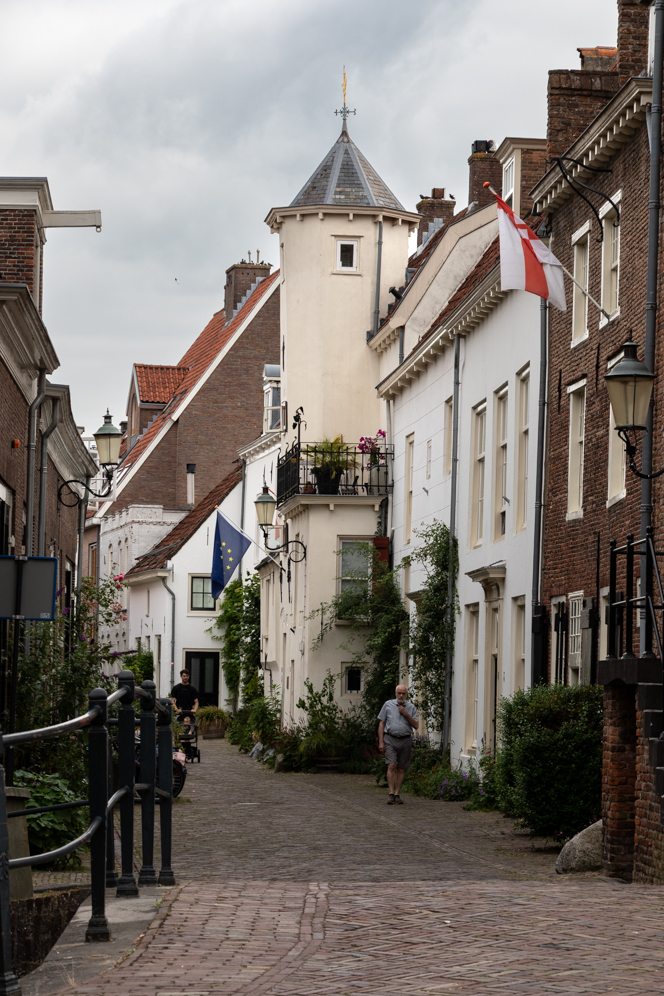
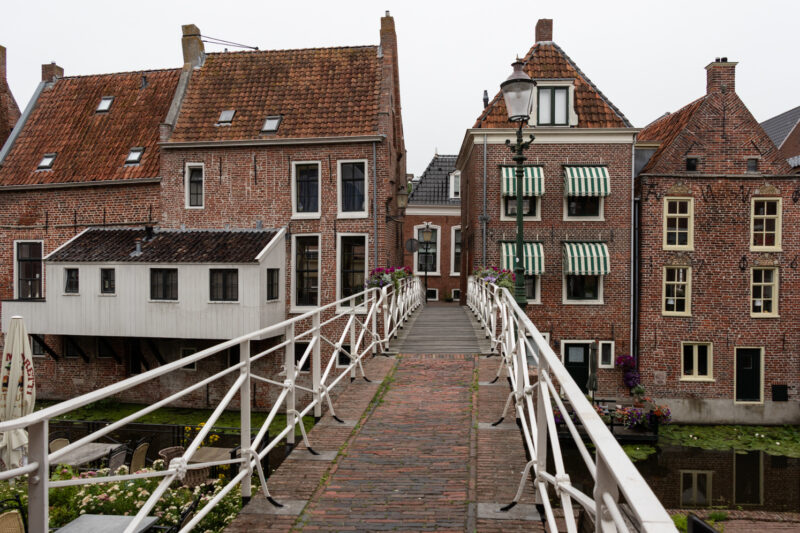
We allowed plenty of time for Amersfoort, and we were glad we did. The city feels compact, yet around almost every corner there is something different to see: a stretch of city wall, an old gate, a quiet courtyard or a canal lined with terraces. The walk along the Muurhuizen made a particular impression. These houses were built where the old city wall once stood, and their varied façades still form a beautiful whole. The Koppelpoort is, of course, Amersfoort’s most famous landmark, but for us the real charm was also in the smaller streets, the lively squares and the feeling that history here is not presented as a backdrop, but simply belongs to everyday city life.
To us, Amersfoort feels like a warm and welcoming city, with an atmosphere that sometimes reminded us of Maastricht. For both of us, it is one of the most beautiful cities in the Netherlands.
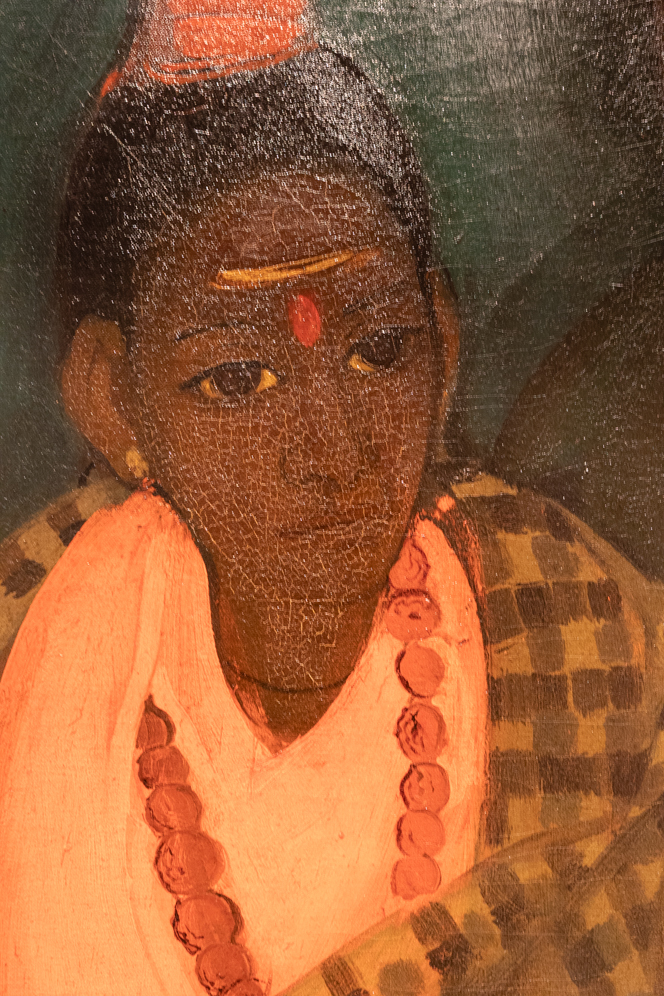
As mentioned in the introduction, one of our reasons for this trip was to visit the Drents Museum for the exhibition about artist Amrita Sher-Gil. We had seen her work on television and immediately ordered the exhibition catalogue. It turned out to be a wonderful focus for this journey.
I wrote a separate post about the exhibition, with photos, titled “Europe belongs to Picasso, India belongs to me”. Link to the post (please click)
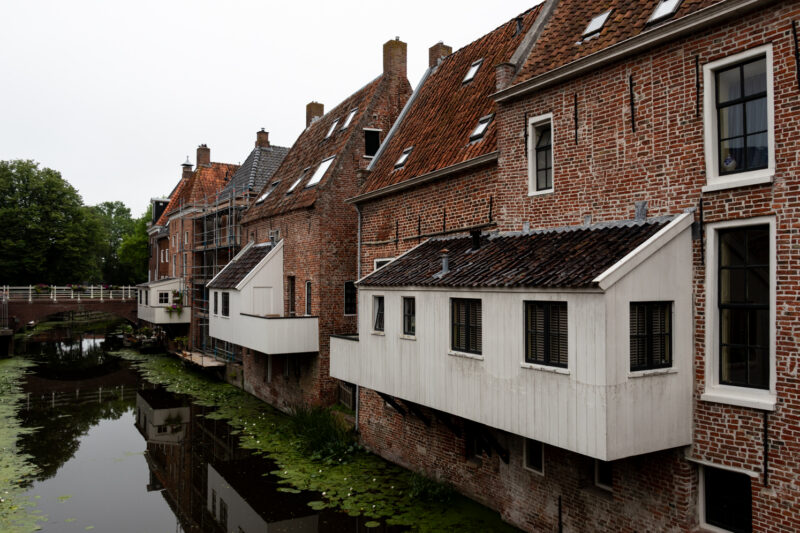
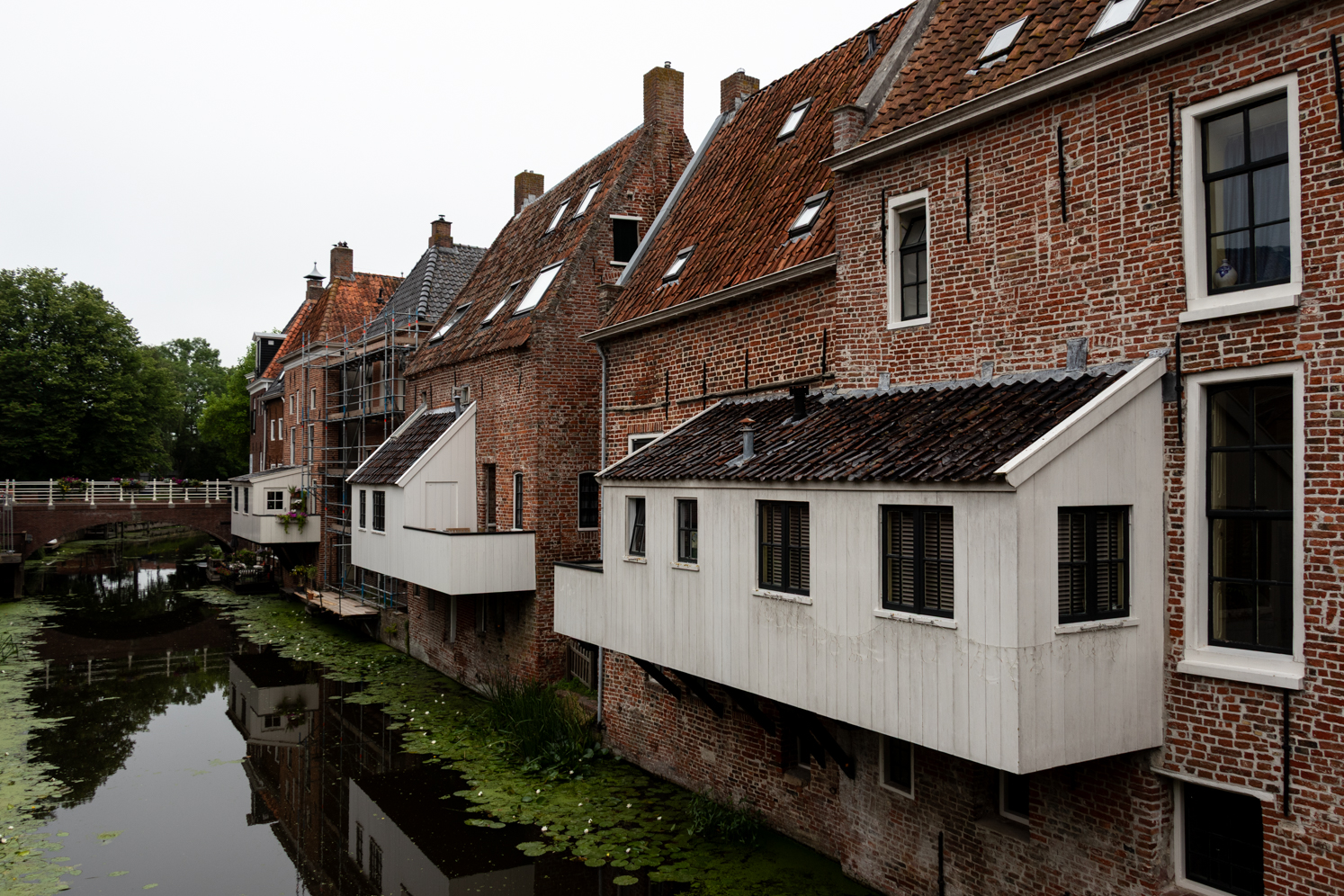
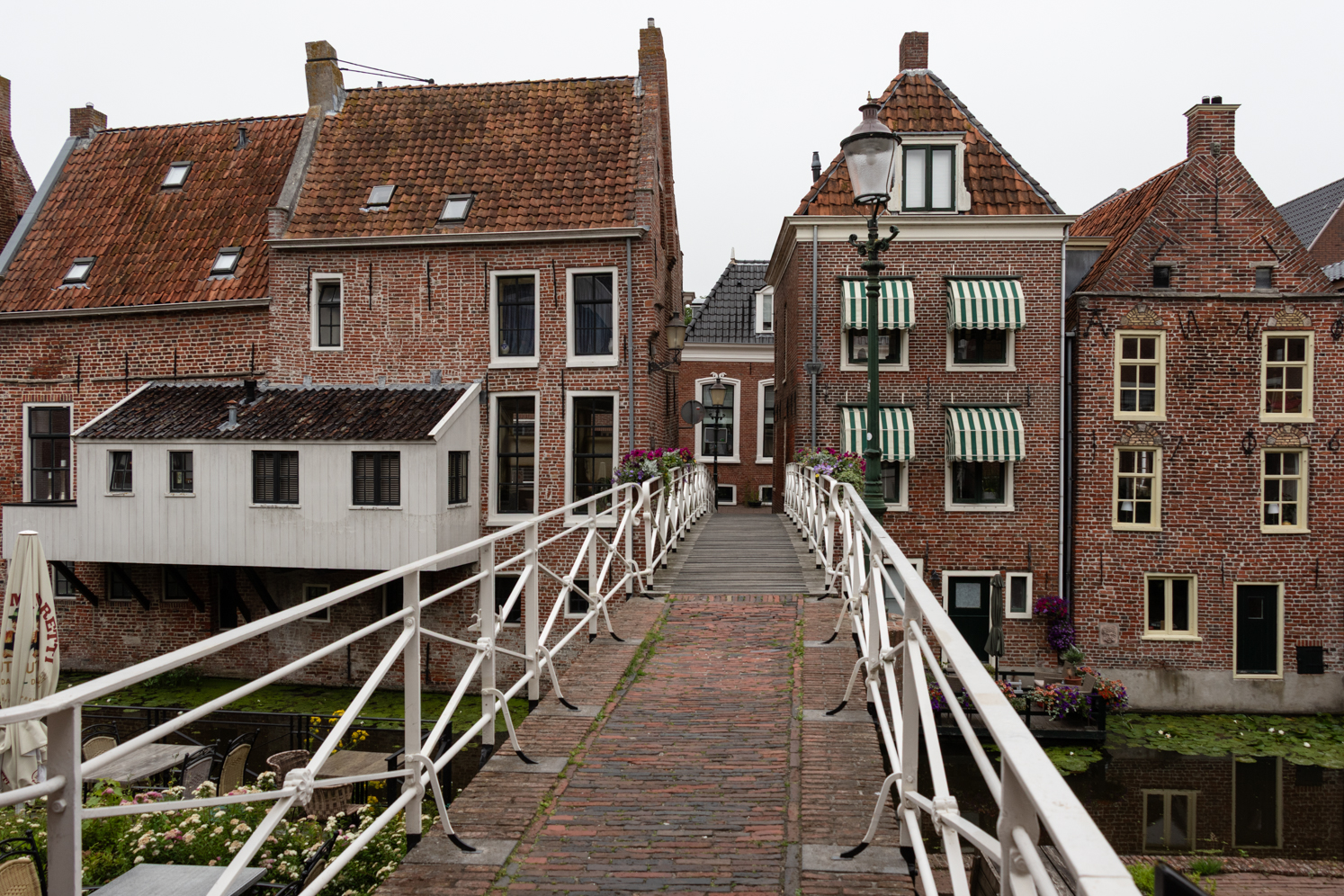
Appingedam was once a prosperous trading and fortified town. Today it is an atmospheric and charming small town, although that former prosperity has faded. The town is best known for its hanging kitchens. These appeared after Appingedam had lost its position as a trading centre and the old warehouses were converted into homes. There was no room for kitchens inside, so they were built out over the water.
The Nicolaikerk is an imposing church, surprisingly monumental for such a small town. It does not feel austere in the way many Protestant churches do. The church is listed as a UNESCO monument.
Uitwierde is a small village built on a wierde, an artificial dwelling mound typical of the northern Netherlands. On top of the mound stands a small church with its original tower from the early 13th century. It is a beautiful little corner of Groningen, with the imposing tower, the later church and the graves surrounding it.
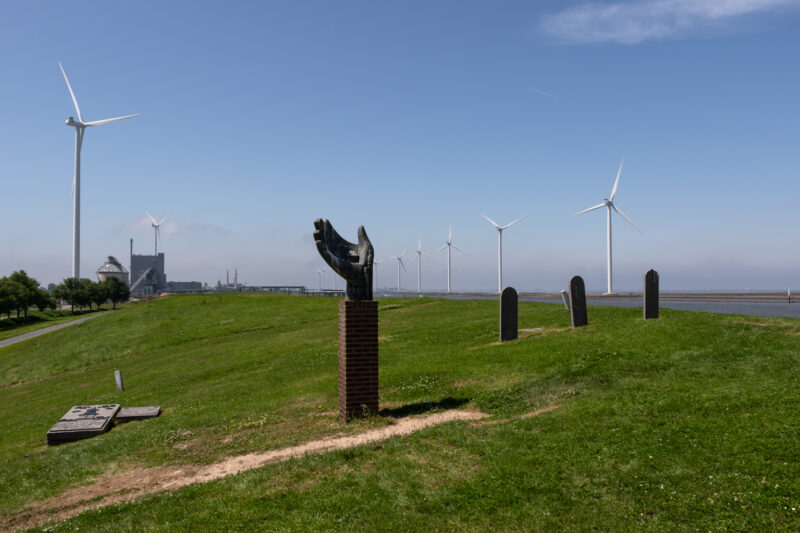
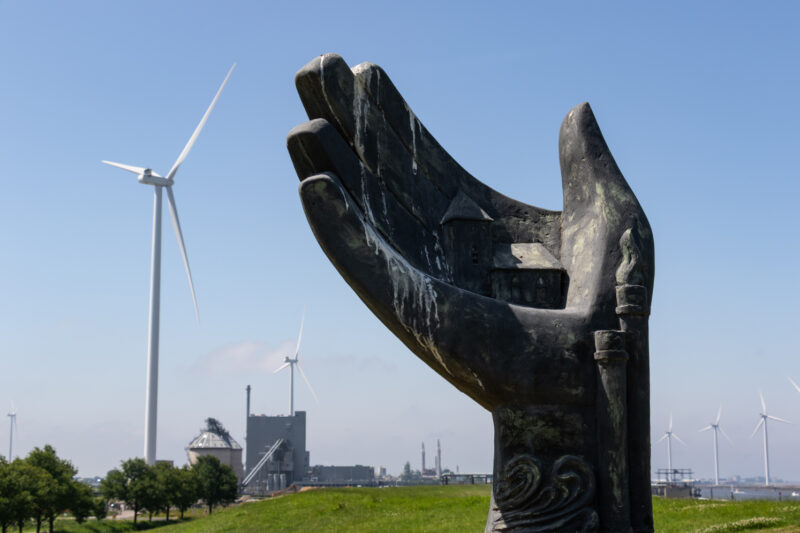
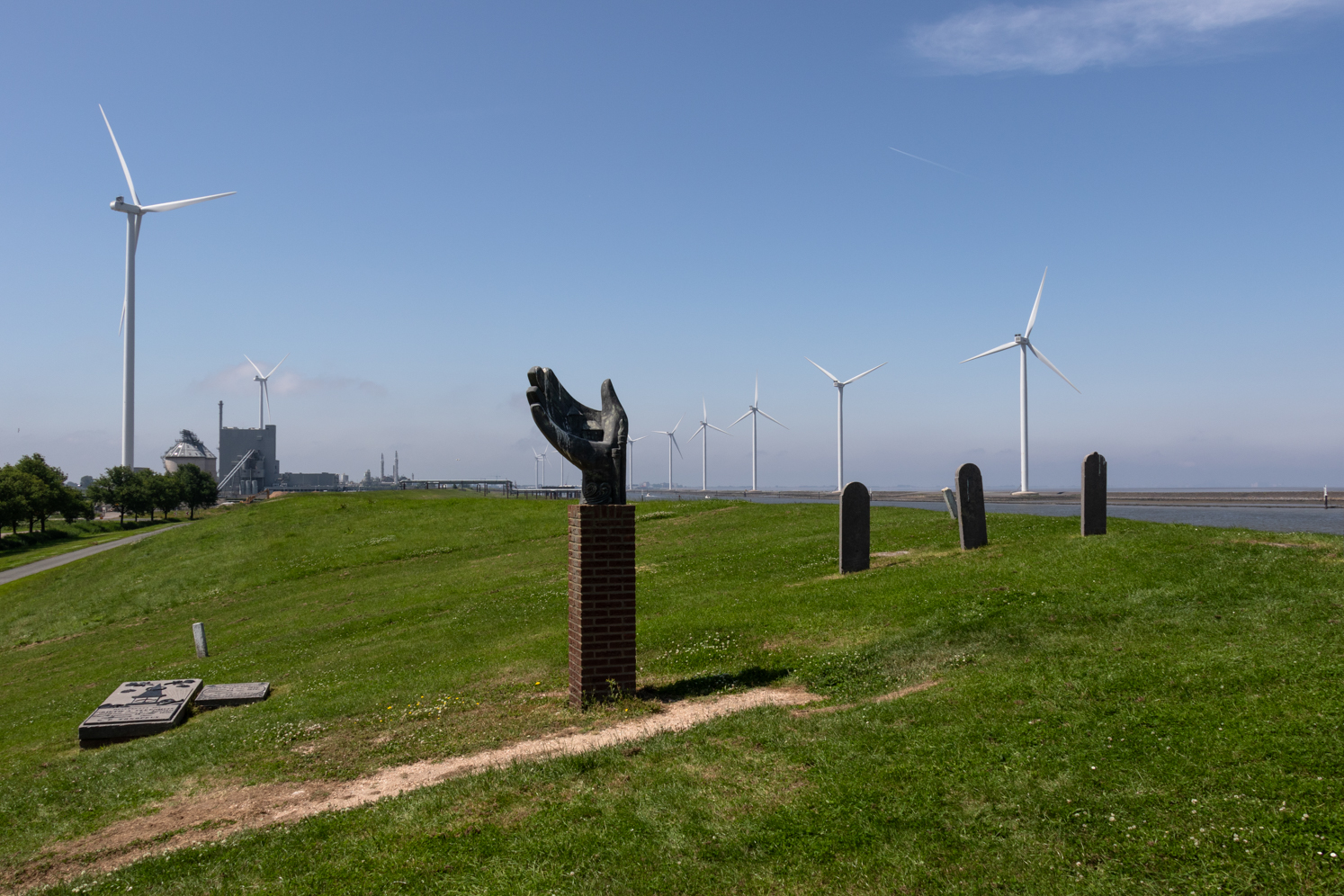
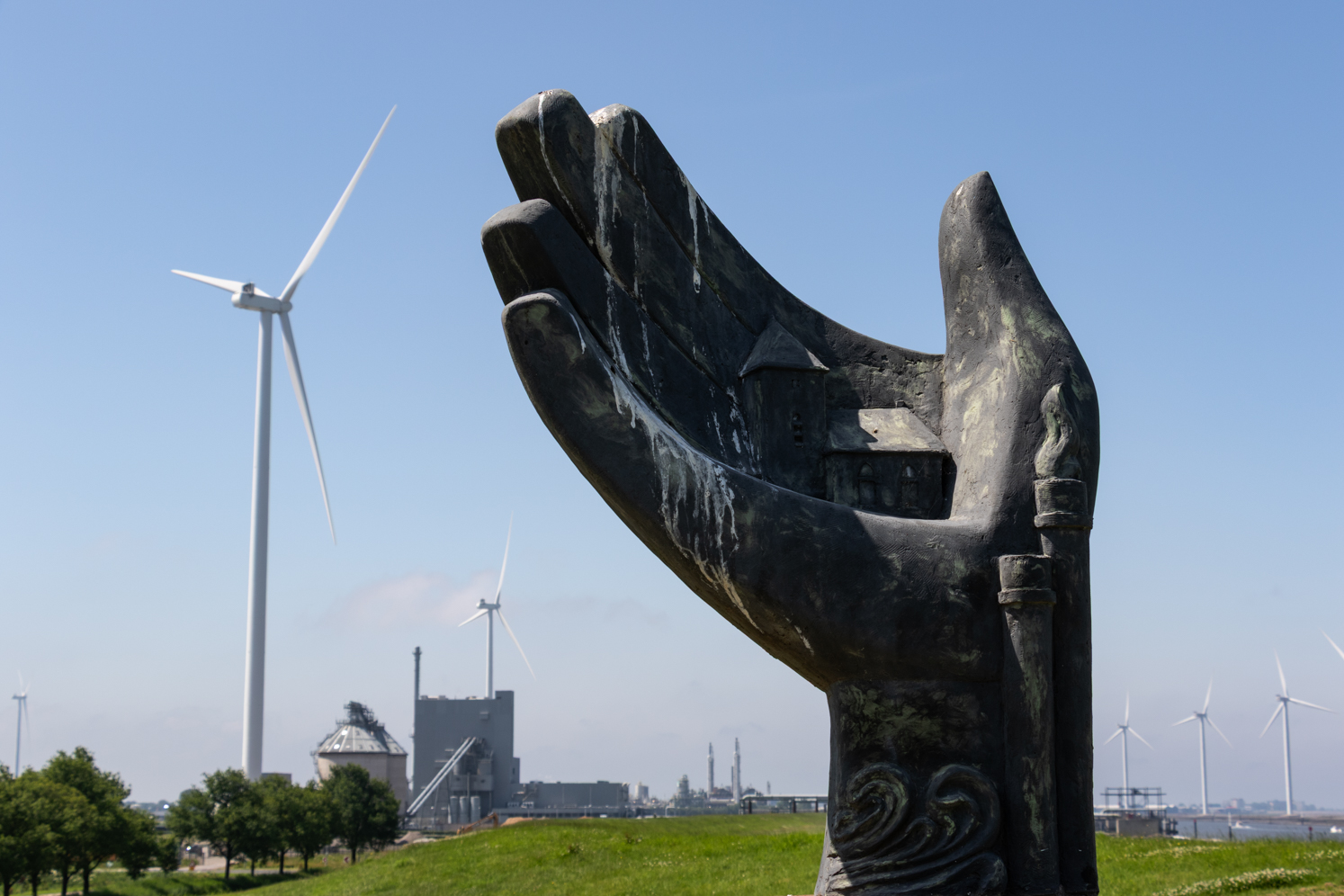
Oterdum was once a village, but it had to make way for industry. The industry never arrived, but the village disappeared all the same. What remains are the gravestones on the dike.
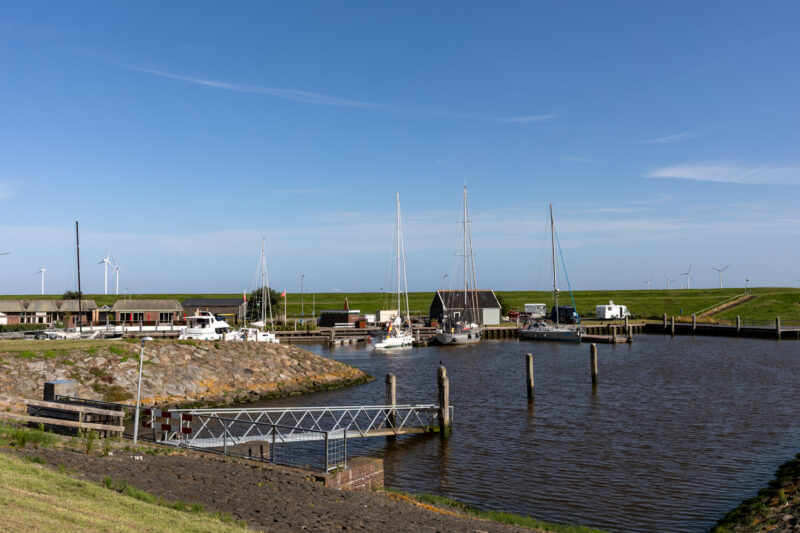
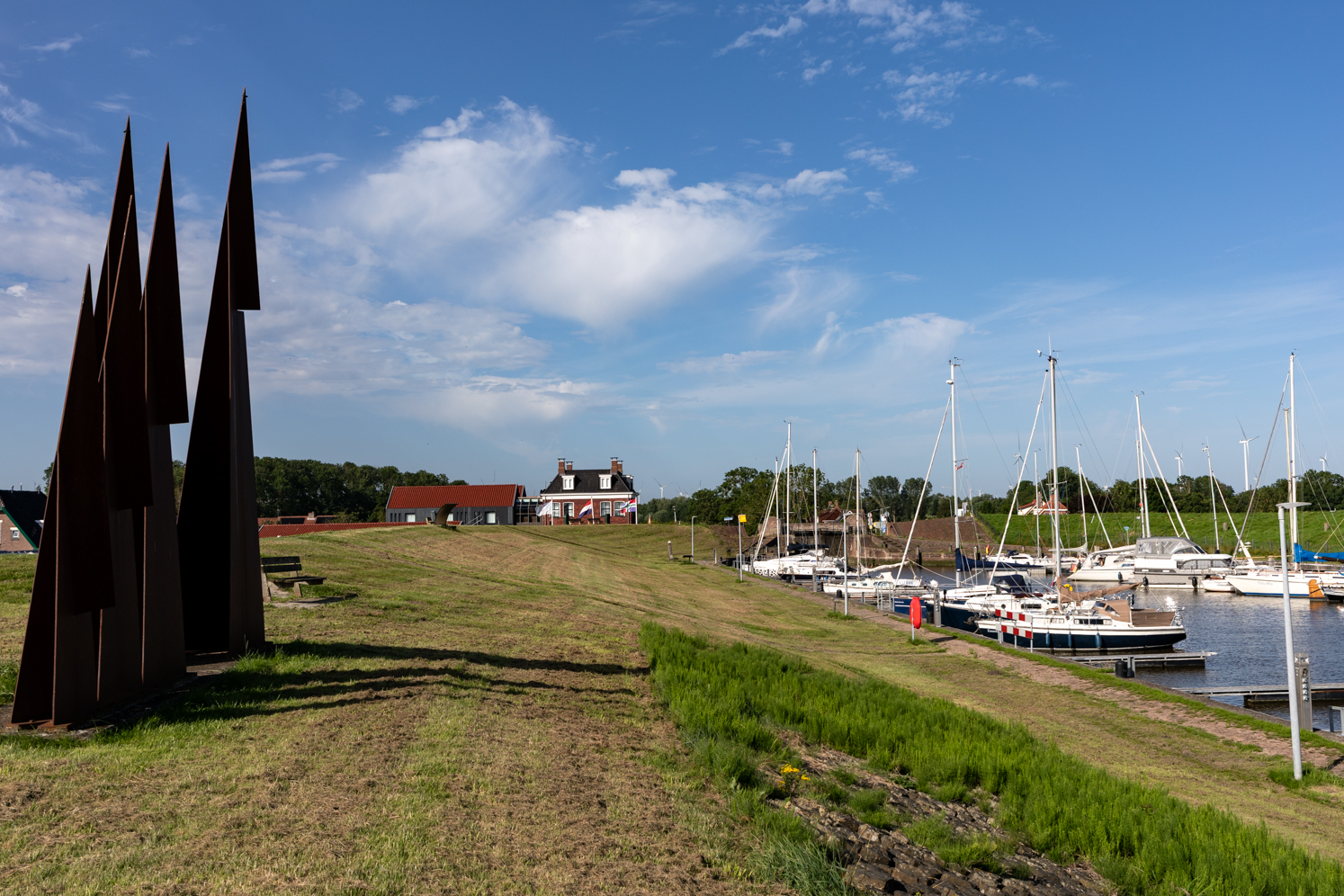
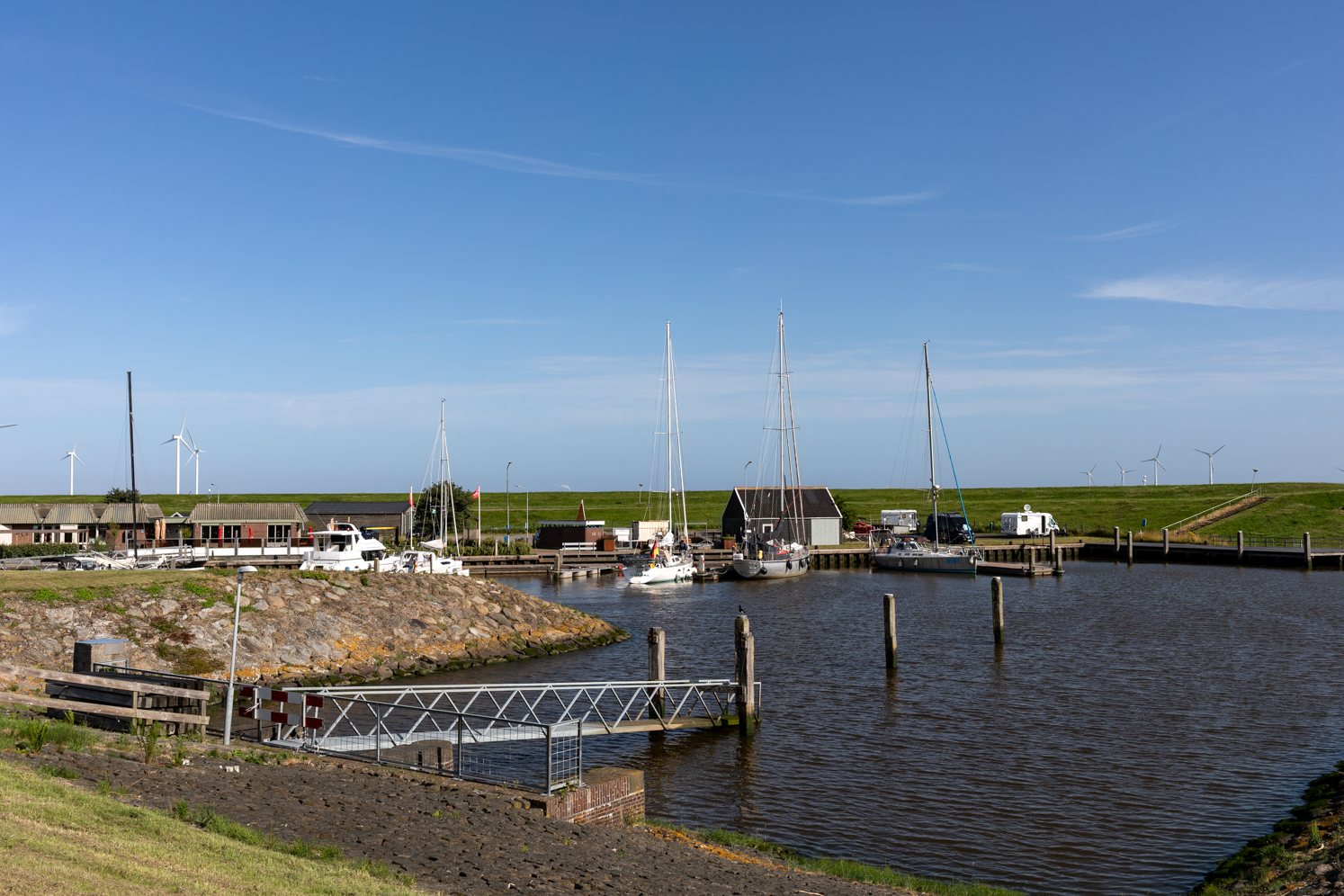
We find Termunterzijl a lovely place to stay with the camper. We park by the harbour. This was our second visit, and it is exactly the kind of place we are happy to return to.
Termunterzijl developed after a sluice, locally called a zijl, was built across the Termunterzijldiep in 1601. In 1686, the sluice was destroyed during the St Martin’s Flood, in which almost the entire population lost their lives. In 1725, the present sluice and arched bridge were built: the Boog van Ziel. It is a fixed brick bridge with sandstone parapets and rich decoration.
Termunterzijl has a unique location on the Ems-Dollard and is part of the Wadden Sea World Heritage Site. It is a pleasant village with a marina, a small beach, museums and local restaurants with terraces and excellent fish dishes.
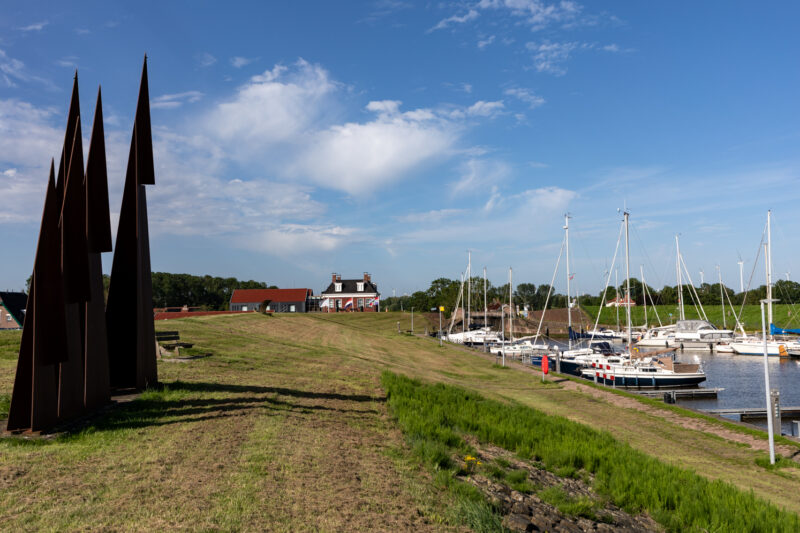
Kollum is a vlek, an old Dutch term for a village with a modest urban character. It lies in the municipality of Noardeast-Fryslân, in the province of Friesland, in the northern part of the Friese Wouden. The village is northeast of Drachten, southeast of Dokkum and southwest of the Lauwersmeer.
Although we did not actually explore Kollum — shame on us — it was still a highlight because we found an excellent camper site by the small marina. We stayed there for two nights.
Looking back, this was exactly the kind of camper trip we enjoy: not too tightly planned, with a few clear goals and enough room to linger wherever it feels right. The Netherlands once again proved surprisingly varied. From the ramparts of Zaltbommel to the dwelling mounds of Groningen, and from Amersfoort to the Lauwersmeer area, every stop had its own atmosphere. That combination is what made this short trip worthwhile.